


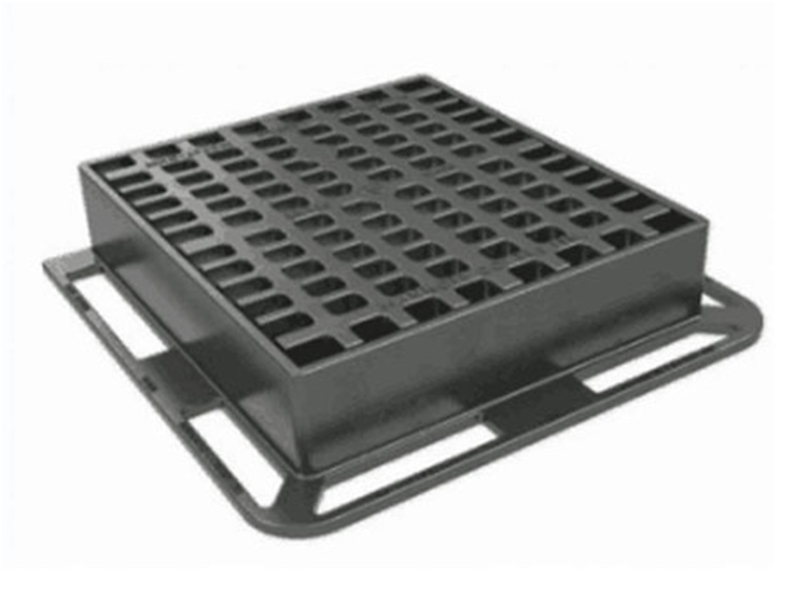
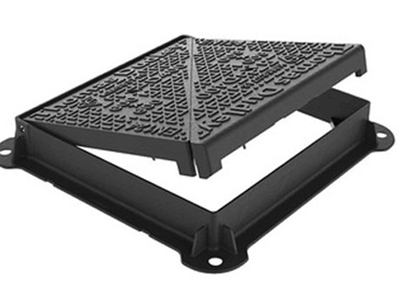
- Cover plate
- Round manhole cover
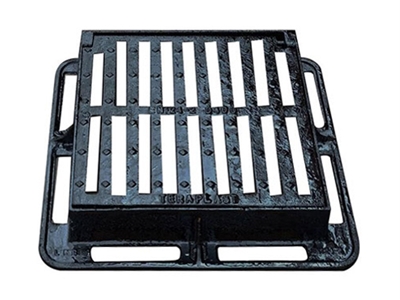
- Cast iron grate
- Foreign trade products
Foreign trade products

- Product Description
Ductile iron manhole covers are a type of ductile iron product. Ductile iron is obtained through spheroidization and inoculation treatment, which effectively improves the mechanical properties of cast iron, especially its plasticity and toughness, thereby achieving strength higher than carbon steel. Developed in the 1950s, ductile iron is a high-strength material with comprehensive performance close to steel. Due to its excellent properties, it has been successfully used to cast parts with complex stress profiles and high requirements for strength, toughness, and wear resistance. Ductile iron has rapidly developed into a widely used cast iron material, second only to gray cast iron. The phrase "iron instead of steel" mainly refers to ductile iron.
Ductile iron manhole covers are generally divided into circular and square shapes. In municipal road works, circular ones are usually adopted because circular manhole covers are less likely to tilt, providing better safety of pedestrians and vehicles. The use of circular manhole covers is primarily because the diameter of a circle is constant in every direction. Thus, if a cover is dislodged by a passing vehicle, its diameter will always be wider than the opening, preventing it from falling into the shaft.
If square manhole covers are used, because the diagonal is significantly longer than each side, when such a cover is dislodged, it can easily fall into the shaft along the diagonal direction, causing safety hazards. If the opening is made circular or significantly smaller than the cover, the square cover will not fall in. This involves the issue of maximum material utilization and conservation. The choice of cover depends on the size of the opening. If a square cover with an area much larger than the opening must be installed, the material utilization and practical value are naturally less effective than using a circular cover, which both saves the material and ensures safety. Ductile iron castings have been applied in almost all major industrial sectors, including rural and electrical infrastructure. These sectors require high strength, plasticity, toughness, wear resistance, resistance to severe thermal and mechanical shocks, high or low temperatures, corrosion, and dimensional stability. To meet these diverse conditions, ductile iron is available in many grades, providing a wide range of mechanical and physical properties.
As stipulated by the International Organization for Standardization (ISO) 1083, most ductile iron castings are produced in a non-alloyed state. Clearly, this range includes high-strength grades with tensile strengths greater than 800 N/mm and elongations of 2%. At the other extreme are high-plasticity grades with elongations greater than 17% and correspondingly lower strengths (minimum 370 N/mm). Tensile strength and elongation are not the only criteria for material selection; other critical properties include yield strength, modulus of elasticity, wear resistance, fatigue strength, hardness, and impact performance. Additionally, corrosion resistance, oxidation resistance, and electromagnetic properties may be crucial for designers. To meet these special applications, a group of austenitic ductile irons, commonly known as Ni-Resist ductile irons, has been developed. These are mainly alloyed with nickel, chromium, and manganese, and are recognized by international standards.
Related Products
More>>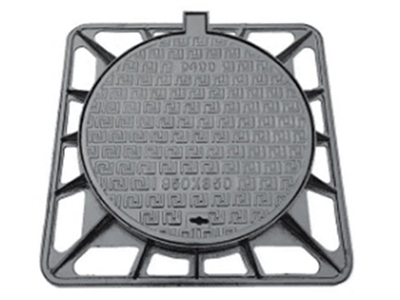


Wu'an Lushen Foundry Co., Ltd.
-
Contact Us
-
Email
-
Address
East of Beifengchang Village, Datong Town, Wu'an City, Handan, Hebei Province